
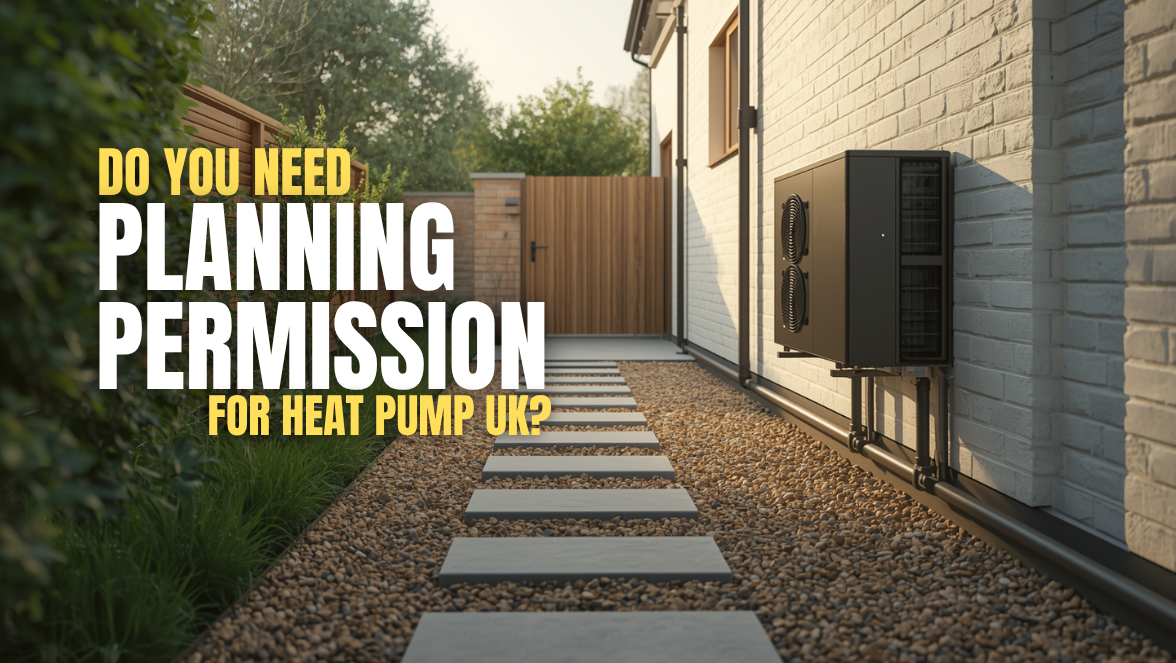
Do You Need Planning Permission for Heat Pump UK?
If you’re planning to install a heat pump, one question comes up immediately.
Do you need approval before you begin?
Understanding heat pump planning permission UK rules helps you avoid delays, unexpected costs, and compliance issues. Fortunately, in many cases, you can install a heat pump without formal planning permission. However, specific conditions still apply.
This guide explains everything clearly, so you can move forward with confidence.
Quick Checklist (Fast Answer)
In most cases, you do NOT need planning permission if:
- Your home is a standard house
- The installation meets permitted development rules
- You position the unit correctly
- The system stays within acceptable noise limits
However, you may need permission if:
- Your property is listed
- You live in a conservation area
- You install the unit in a restricted position
Quick Answer
In the UK, most homeowners can install a heat pump under permitted development rights, which means you do not need planning permission.
However, you must still meet specific conditions related to placement, noise, and property type.
Are Heat Pumps Permitted Development UK?
Yes, in many situations, heat pumps qualify as permitted development in the UK.
This means you can install them without applying for planning permission.
However, this only applies when you follow the required guidelines. For example, you must install the unit in a suitable location, keep noise within limits, and ensure the system meets size restrictions.
If you do not meet these conditions, you may need approval from your local council.
What Does Planning Permission Mean for Heat Pumps?
Planning permission allows your local authority to control how developments affect surroundings.
For heat pumps, this mainly involves:
- Where you place the unit
- How visible it is
- How much noise it produces
Even if you do not need planning permission, you must still follow building regulations and installation standards.
When Heat Pumps Fall Under Permitted Development
In most cases, standard residential installations qualify.
For example, you can usually proceed without permission if:
- You own a detached or semi-detached house
- You install the unit at ground level or on a suitable wall
- You follow noise and positioning guidelines
As a result, most homeowners can move forward without major planning barriers.
When Planning Permission May Be Required
However, some situations require additional approval.
Listed Buildings
If your property is listed, you will usually need permission due to stricter rules.
Conservation Areas
If your home is in a conservation area, local authorities may apply additional restrictions.
Flats and Apartments
Permitted development rights often do not apply to flats.
Incorrect Placement
If you place the unit in a visible or unsuitable location, you may need approval.
Noise Issues
If the system exceeds acceptable noise levels, planning permission may become necessary.
Summary Table: When Permission Is Needed
| Situation | Planning Permission Likely? |
|---|---|
| Standard house | Usually not required |
| Listed building | Often required |
| Conservation area | Sometimes required |
| Flats or apartments | Often required |
| Incorrect placement or noise | May be required |
What Should You Check Before Installation?
Before you proceed, take a few simple steps.
First, confirm your property type.
Then, check local council guidance.
Next, review system placement and noise levels.
Finally, speak with an experienced installer.
By doing this, you reduce risk and ensure a smooth installation process.
Common Mistakes and Misunderstandings
Many homeowners run into issues because they overlook key details.
Assuming Permission Is Never Needed
Although many installations qualify, exceptions still exist.
Ignoring Property Type
Different rules apply to flats and listed buildings.
Overlooking Noise Limits
Noise regulations can affect whether your installation qualifies.
Skipping Local Checks
Each council may apply slightly different interpretations.
Therefore, always confirm before you proceed.
Get Expert Advice Before Installing
Although general rules help, every property is different.
👉 Get a tailored quote and installation guidance here:
https://cosyheatpumps.co.uk/quote/
👉 Or speak directly with an expert about your situation:
https://cosyheatpumps.co.uk/contactus/#form
This way, you can avoid uncertainty and move forward with confidence.
Final Thoughts
The heat pump planning permission UK process is often straightforward. However, it still depends on your property and installation details.
In most cases, permitted development allows you to proceed without formal approval. Nevertheless, you should always verify your situation to avoid complications.
Ultimately, proper planning ensures a smooth, compliant, and efficient installation.
FAQs
Do all heat pumps require planning permission in the UK?
No, most heat pump installations do not require planning permission because they fall under permitted development. However, you should still check your property type and local rules before proceeding.
Are heat pumps permitted development UK?
Yes, in many cases, heat pumps qualify as permitted development in the UK. That said, you must meet conditions such as correct placement, noise limits, and property eligibility.
Do I need planning permission for a heat pump in a conservation area?
It depends. In some cases, you can still install a heat pump under permitted development. However, if the unit affects the appearance of the area, your local authority may require approval.
What happens if my property is a listed building?
In this case, you will usually need planning permission. Listed buildings follow stricter regulations, so you should always consult your local council before installation.
Can heat pump noise affect planning permission?
Yes, it can. If the system exceeds acceptable noise levels, it may not qualify as permitted development. Therefore, proper placement and system selection are important.
What should I do before installing a heat pump?
First, check your property type and local planning rules. Then, confirm system placement and noise compliance. Finally, speak with an expert to ensure everything meets regulations before installation.
Leave a Reply