
Introduction
Heating your home is one of the biggest contributors to your energy bills. In fact, UK households spend over 60 percent of their total energy on heating and hot water, according to the Energy Saving Trust.
That is exactly why more homeowners are now asking. How do heat pumps save energy compared to traditional systems?
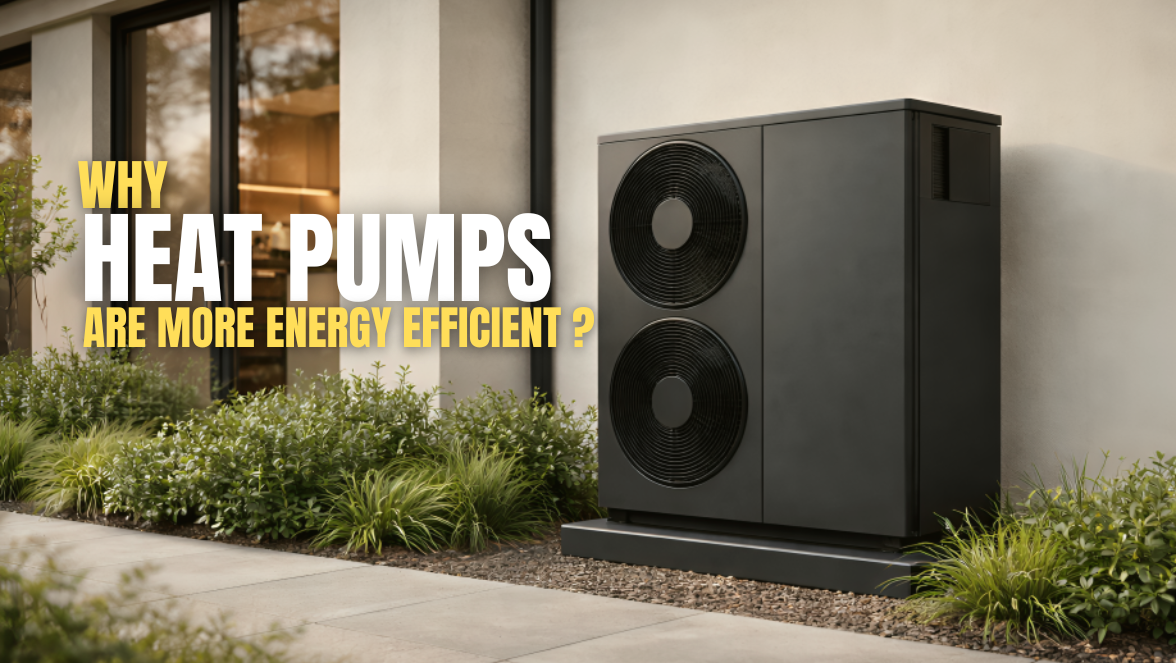
Here is the simple truth. Heat pumps do not generate heat like boilers. Instead, they transfer heat from the outside environment into your home, using far less electricity.
This approach allows modern systems to achieve 300 to 400 percent efficiency, making them one of the most effective solutions for energy efficient home heating.
If you are looking to reduce bills, improve efficiency, or switch to a renewable heating system, this guide will walk you through everything you need to know.
What Is a Heat Pump and How Does It Work?
A heat pump is a system designed to extract heat from outside and move it indoors to warm your home.
Unlike traditional heating systems, it does not rely on burning fuel. Instead, it uses electricity to transfer existing heat energy.
Most homes in the UK use air source heat pumps, which absorb heat from the air even during colder months.
Here is how the process works:
- The outdoor unit collects heat from the surrounding air
- A refrigerant absorbs and carries that heat
- The compressor increases the temperature
- Heat is transferred into your home’s heating system
Because it moves heat instead of creating it, the system uses significantly less energy.
That is the foundation of heat pump energy savings.
How Do Heat Pumps Save Energy Compared to Traditional Heating?
To fully understand how do heat pumps save energy, you need to look at how they differ from standard heating systems.
Traditional systems like boilers or electric heaters convert fuel or electricity into heat. During that process, some energy is always lost.
Heat pumps take a different approach. They use electricity to transfer heat, which allows them to produce more energy output than they consume.
Let me explain this in a simple way.
COP (Coefficient of Performance) Explained Simply
The efficiency of a heat pump is measured using something called Coefficient of Performance (COP).
COP shows how much heat you get compared to the electricity used.
For example:
- COP 1 = 1 unit of electricity gives 1 unit of heat
- COP 3 = 1 unit of electricity gives 3 units of heat
Most modern heat pumps operate between COP 3 and COP 4.
This means they produce three to four times more heat than the electricity they use.
According to the International Energy Agency, heat pumps can reduce electricity demand for heating by up to 50 percent compared to electric resistance systems.
That is the real answer to how heat pumps save energy.
Heat Pumps vs Gas Boilers: Energy Comparison
Gas boilers have been widely used across the UK for years. However, their efficiency is limited.
Even modern boilers only reach around 85 to 92 percent efficiency.
Heat pumps go beyond that because they do not rely on combustion.
Here is what that means for homeowners:
Lower energy usage
Heat pumps require less energy to produce the same heating output
Lower emissions
They support cleaner energy as the UK grid becomes more renewable
Better long term efficiency
They are aligned with future energy trends
According to the Energy Saving Trust, switching from a gas boiler can reduce emissions by up to 1.6 tonnes of CO₂ annually.
Heat Pumps vs Electric Radiators: Which Saves More?
Electric radiators may seem efficient because they convert all electricity into heat.
But here is the catch.
They only produce one unit of heat per unit of electricity.
Heat pumps produce three to four units of heat from the same electricity input.
That is a huge difference.
This is why air source heat pump savings are much higher when replacing electric heating systems.
How Much Energy Can a Heat Pump Actually Save?
Now let us talk about real savings.
The amount you save depends on your home, insulation, and current heating system.
However, UK data gives us clear estimates.
Replacing electric heating:
Savings of £700 to £1,500 per year
Replacing oil or LPG systems:
Savings of £300 to £800 annually
Replacing gas boilers:
Savings vary, but overall energy use still decreases significantly
Many homes achieve 30 to 50 percent reduction in heating energy consumption.
There is more.
The UK government offers support through the Boiler Upgrade Scheme, with grants of up to £7,500.
If you want to see your exact numbers, you can use a heat pump savings calculator to estimate your potential savings based on your home and energy usage.
What Factors Affect Heat Pump Energy Savings?
Not all homes will see the same results.
Several key factors influence how much energy a heat pump can save.
Home Insulation
Good insulation makes a major difference.
A well insulated home keeps heat inside longer, which means the heat pump does less work.
Better insulation leads to higher heat pump efficiency.
Outdoor Temperature
Heat pumps work efficiently even in cold weather.
The UK climate is ideal because temperatures are moderate.
Most systems work effectively down to −15°C.
System Sizing and Installation
Correct installation is critical.
If the system is too small, it will struggle. If it is too large, it will run inefficiently.
This is why it is important to get a quote from a professional installer who can assess your home properly.
Is a Heat Pump Worth It for Your Home?
For many homeowners, heat pumps are becoming a smart long term investment.
Here is why.
Lower energy consumption
They use less electricity to generate more heat
Reduced carbon footprint
They support cleaner, renewable energy
Future ready solution
They align with UK energy goals
Government incentives available
Grants help reduce upfront costs
But every home is different.
To understand your exact situation, the best step is to get a quote from a trusted installer who can evaluate your property and give a tailored recommendation.
Use Our Heat Pump Savings Calculator
Before making a decision, it is important to understand your numbers.
A heat pump savings calculator helps estimate:
- Your current heating costs
- Potential savings
- Payback period
It is one of the easiest ways to understand whether switching to a heat pump makes financial sense.
You can quickly calculate your savings using a heat pump savings calculator and get a clear picture of long term benefits.
Frequently Asked Questions
Do heat pumps really save money?
Yes. Heat pumps reduce energy use because they transfer heat rather than generate it. Many homes see 30 to 50 percent lower energy consumption.
How much can a heat pump reduce my energy bill?
Savings depend on your current system. Homes replacing electric heating can save hundreds to over £1,000 per year.
Are heat pumps efficient in cold weather?
Yes. Modern systems operate efficiently even in temperatures as low as −15°C, making them suitable for UK conditions.
How long does it take for a heat pump to pay for itself?
Most systems pay back within 7 to 12 years, depending on installation cost and savings.
What is the most energy-efficient type of heat pump?
Ground source heat pumps offer the highest efficiency. However, air source systems provide the best balance of cost and performance for most homes.
Conclusion
Heat pumps save energy because they move heat instead of producing it through combustion. This allows them to deliver multiple units of heat for every unit of electricity used.
The result is lower energy consumption, reduced bills, and a more sustainable heating solution.
If you are considering upgrading your heating system, start by using a heat pump savings calculator to understand your potential savings.
Then take the next step and get a quote from a professional installer to see how a heat pump can work for your home.
Leave a Reply